








Decarbonisation
One floor, a whole building or your entire estate. We deliver smart retrofit strategies that reduce emissions, improve EPCs and futureproof assets with minimal disruption to ongoing operations.
What is Decarbonisation?
Decarbonisation in construction refers to reducing both embodied carbon (from materials and construction) and operational carbon (from day-to-day energy use).
Historically, legislation such as Minimum Energy Efficiency Standards (MEES) has focused on the operational side, but embodied emissions remain largely unregulated. Similarly, Energy Performance Certificates (EPCs) only provide a snapshot of how the building should perform at a moment in time and are not verified once a building is in use, with schemes such as NABERS looking to shift the emphasis onto real-world operational data.
With legislation tightening and demand for sustainable buildings rising, decarbonisation in construction has quickly shifted from an ambition to a necessity. In the UK, existing commercial buildings are responsible for nearly 6% of carbon emissions, and 80% of the buildings that will be in use in 2050 already exist. This makes retrofit a crucial tool in achieving net-zero targets by 2050.
Benefits of Decarbonisation
- Aligns with MEES trajectory to EPC Band B by 2030
- Reduces operational costs and long-term energy spend
- Improves EPC ratings and ESG credentials
- Attracts sustainability-conscious occupiers
- Drives asset value and marketability
- Supports compliance with future net-zero frameworks
Challenges of Decarbonisation
- Occupied buildings require phasing and sequencing to maintain live operations
- Electrification increases load, often pushing capacity beyond current supply limits
- Infrastructure upgrades may require new substations or utility coordination
- Cost vs. value analysis is key, as some interventions offer rapid payback, others are strategic and long-term

Our Process
We approach each decarbonisation project as a complete cycle, from understanding your asset’s baseline to verifying real-world performance post-installation.
-
We begin with a detailed performance review:
- EPC and operational carbon benchmarking
- Fabric surveys and as-built information analysis
- Review of BMS trend logs and available real-world data
- Identification of baseline inefficiencies
This stage provides a data-led foundation for all future decisions.
-
We model a variety of upgrade paths tailored to your building’s condition, tenancy profile, and compliance targets. These might include:
- Fabric improvements
- Replacement of heating/cooling systems
- Smart control integration
We assess each scenario for energy performance uplift, MEES alignment, investment profile, and timing, identifying voids or tenancy breaks that allow minimal-disruption delivery.
-
We plan the work in close coordination with your teams and tenants. This includes:
- Integration and disruption planning
- Contractor access strategy
- Safety protocols and site logistics
- Liaison with utility providers for power upgrades
Every element is phased to minimise downtime, especially in live or sensitive environments.
-
Once works are delivered:
- We arrange an updated EPC to confirm performance uplift
- Continue monitoring operational data post-completion
- Fine-tune controls and adjust usage patterns
- Support your FM or asset team in embedding long-term performance gains
There are different levels of intervention depending on how far your building is from its performance target.
We categorise these into three tiers, enabling you to plan, budget, and deliver according to what’s needed now and what’s required next.
Level 1 – Light-Touches
- Replacing light fittings with high-efficiency LEDs
- Reprogramming BMS and control systems
- Adjusting zoning and air flows
- Undertaking maintenance on existing systems to ensure efficient operation
Level 2 – Mid-Level Upgrades
- Replacing fan coil units and upgrading controls
- Installing smart lighting controls and metering
- Minor fabric interventions (e.g. insulation, glazing)
Level 3 – Major Interventions
- Removing gas infrastructure
- Installing all-electric refrigerant based heating/cooling
- Upgrading power supply and substations
- Whole-building plant and façade replacement

In-House Expertise
Successful decarbonisation doesn’t rest with one department. It relies on sustainability insight working hand in hand with technical execution.
That’s why our Sustainability and Technical Services teams collaborate from day one, ensuring every intervention is environmentally strategic and buildable, maintainable, and aligned with operational constraints. From understanding net-zero compliance to planning substations, sequencing shutdowns or tuning control systems, our in-house teams speak the same language, avoiding disconnect between vision and delivery.

Our Sustainability team brings knowledge of carbon regulation, embodied emissions, and energy benchmarking. They assess baseline performance, model future impact, and align upgrades with MEES and net-zero trajectories.
Our Technical Services team ensures every design decision is technically robust, whether it involves load calculations, power upgrades, controls integration, or infrastructure phasing.
Together, they create coordinated retrofit strategies with:
- No design guesswork
- No value engineering compromises
- No post-installation surprises
- Portfolio-wide monitoring strategies
Mosaic East – Feldberg Capital
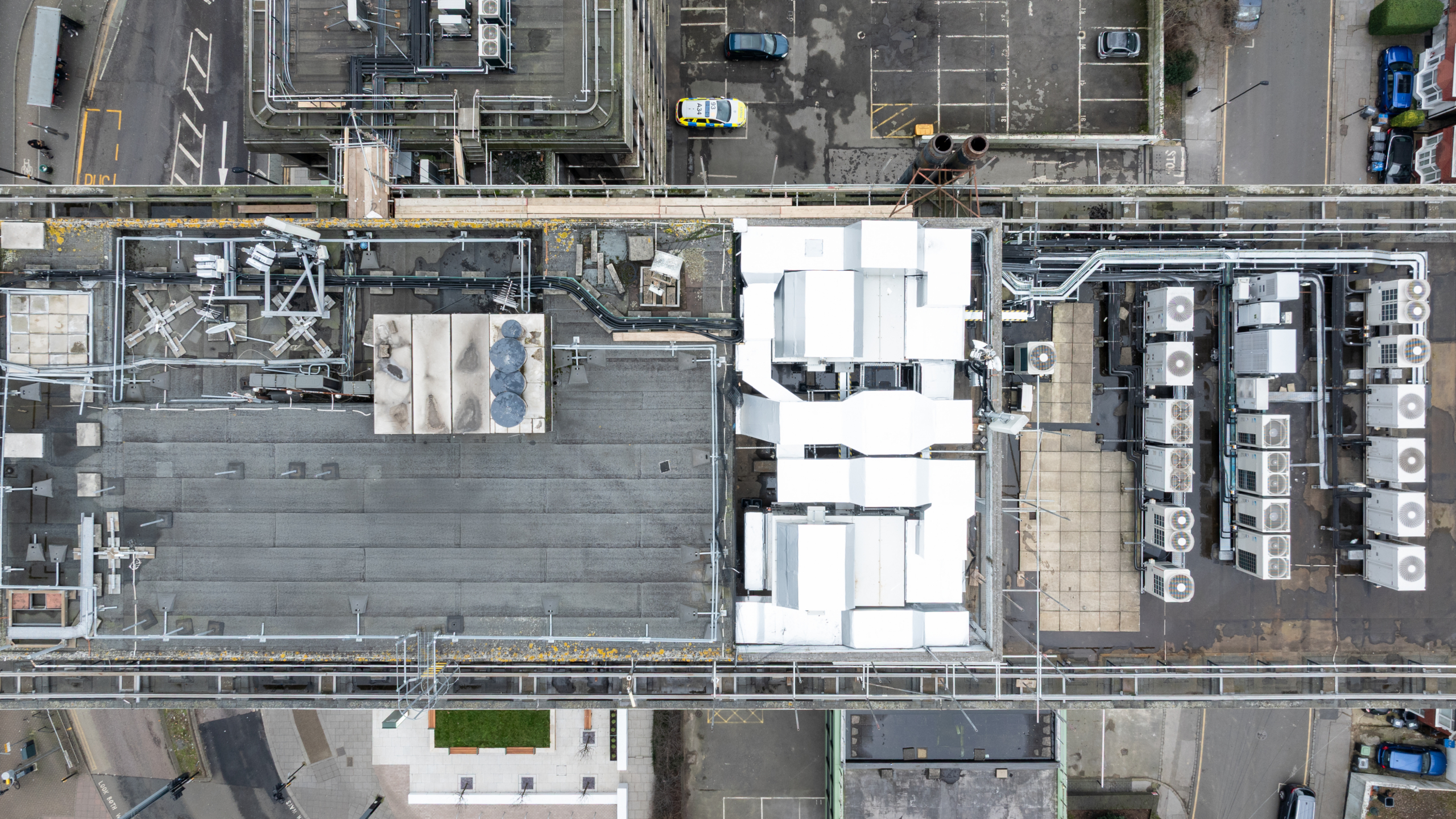
Our work on Knollys & Stephenson is an example of decarbonisation delivered under live operational constraints. We completed a phased replacement of two 2500kVA HV transformers and associated low-voltage distribution systems, including life safety and PLC infrastructure, all while maintaining power to the building. We also replaced four rooftop air handling units and integrated them with 13 existing duct risers, ensuring comfort throughout the building while preparing for future fit outs.
The Waterman – BGO
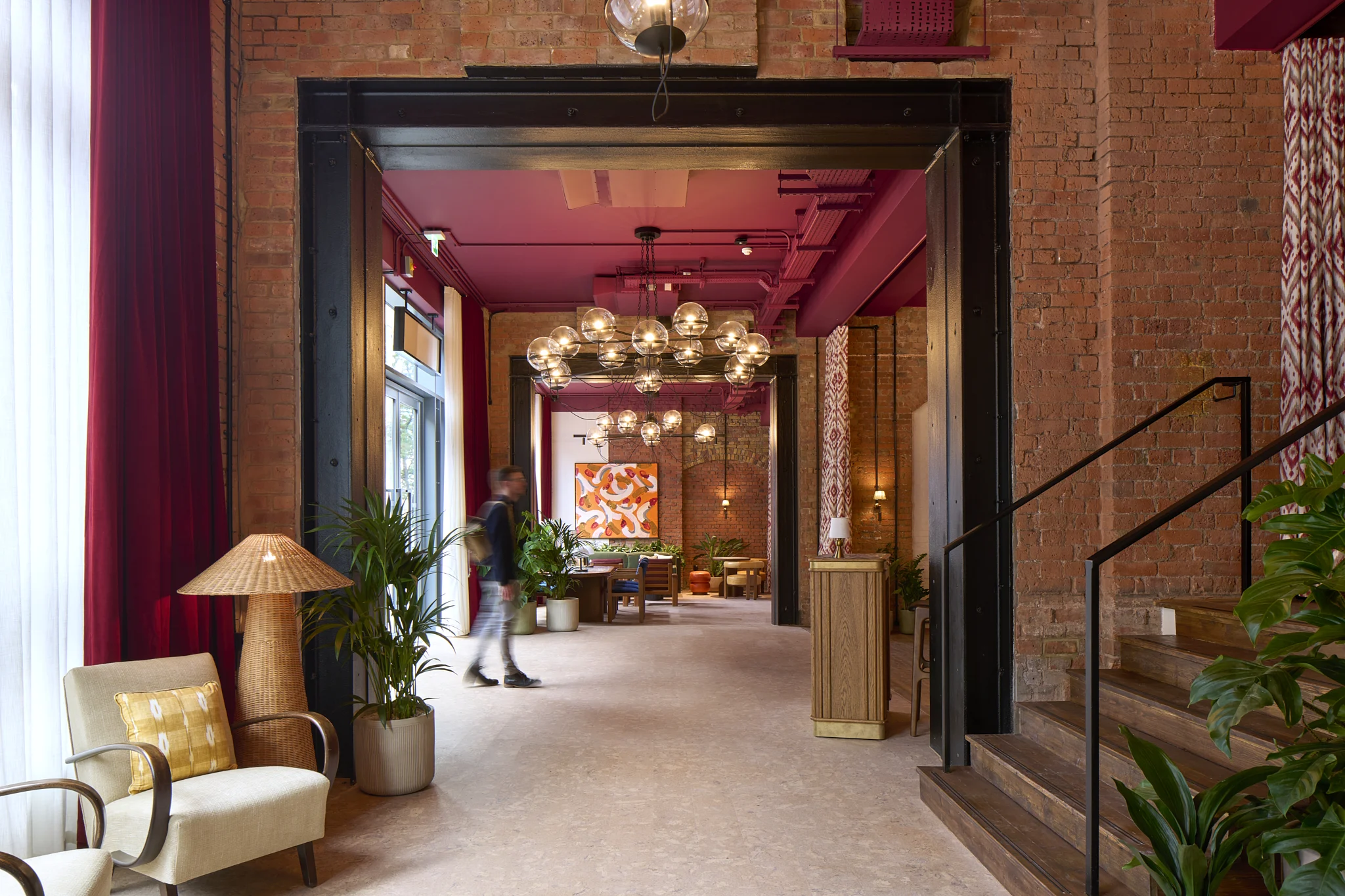
At The Waterman in Farringdon, we removed the existing gas infrastructure and introduced a dedicated 1000kVA substation alongside 15 VRF systems and intelligent lighting controls. Fabric improvements included new curtain walling and replacement glazing, which, combined with the building services upgrade, delivered an EPC A, a marked improvement from its previous E–B ratings across various tenancies.

160 Queen Victoria Street
For 160 Queen Victoria Street, we replaced the gas boiler plant with multiple air source heat pumps and undertook a phased roll-out of VRF systems across multiple floors. LED lighting and a scenic lift were introduced as part of a Cat A fit out, all delivered in a fully tenanted building.

The King’s Cross Estate
At King’s Cross, we’re currently delivering Phase 1 of the district heat network decarbonisation. This involves replacing a 1.8MW absorption chiller with a 2.3MW heat recovery heat pump. Using historic and current demand data, we designed a bespoke system with individual compressor control and a turndown capability to maintain efficiency year-round. The works also include ATEX-rated enclosures and DSEAR assessments due to the isobutane refrigerant. We are also providing portfolio-wide feasibility studies on asset-level upgrades required to reduce the energy demand on the heat network.